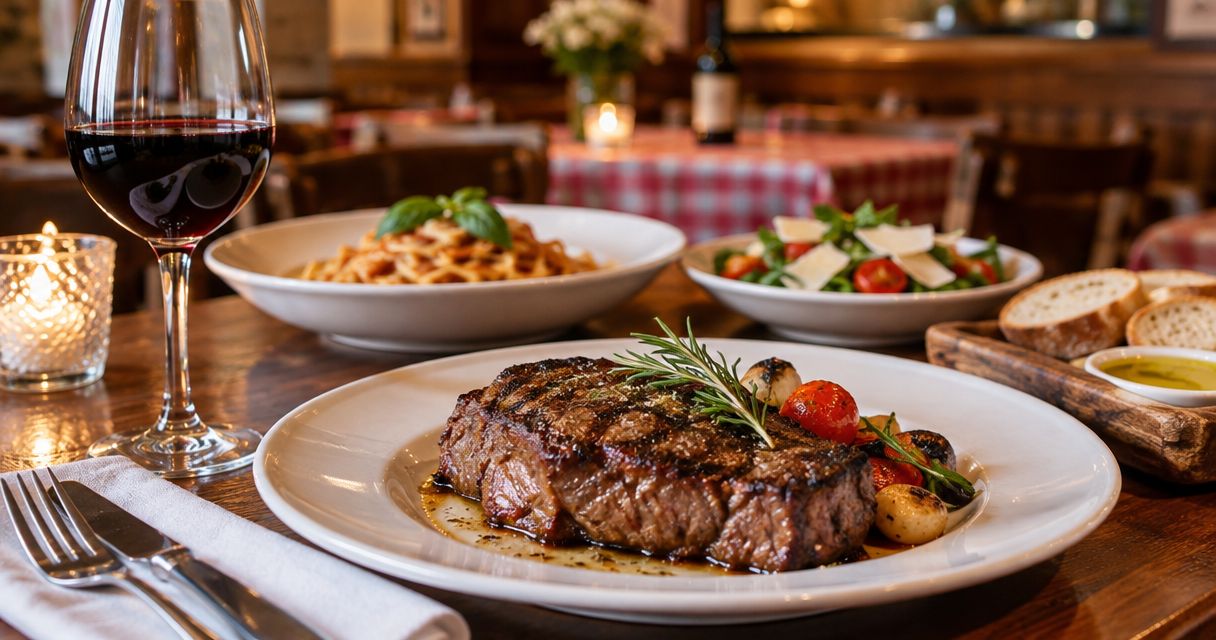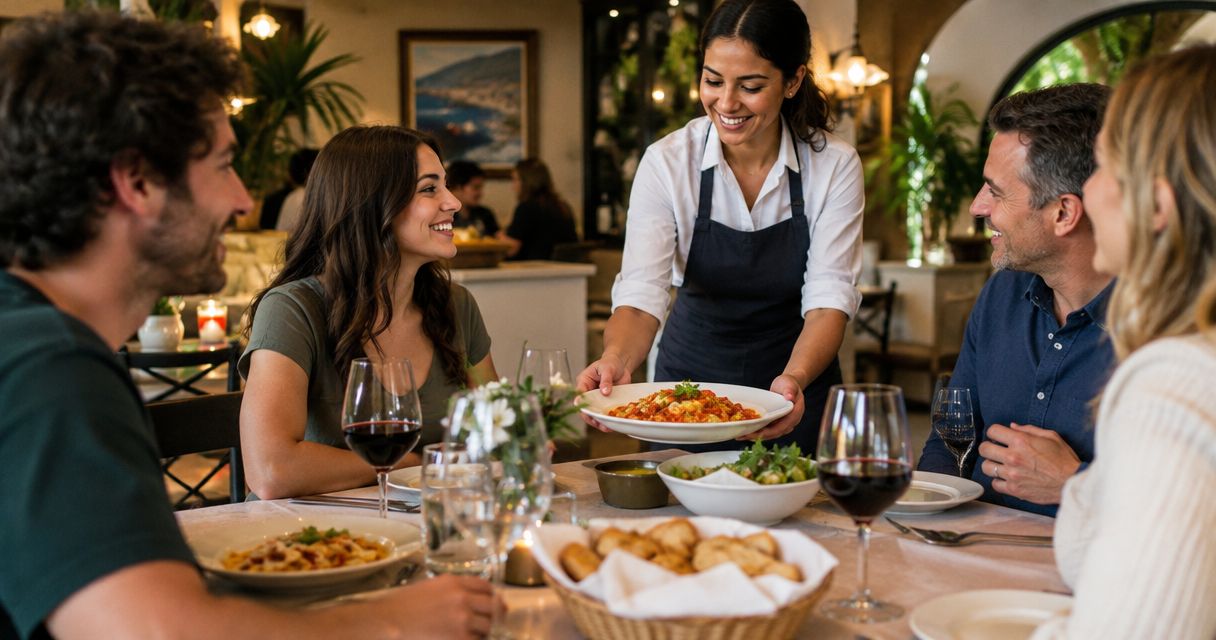
Plan an Italian dinner with dietary needs in Massapequa by identifying each guest’s restrictions, checking the current menu, and discussing ingredients and preparation with the restaurant before you reserve. For a Wednesday or Thursday dinner in Massapequa Park, confirm what the kitchen can accommodate before choosing your meal; a reservation note alone does not establish that a dish meets your needs.
- For italian restaurants massapequa searches, confirm ingredients and preparation before booking, not after ordering.
- Mangiabeviny suits guests seeking modern Italian dining in Massapequa Park; discuss dietary requirements directly before reserving.
- Food allergies, celiac disease, intolerances, and vegetarian preferences require different questions.
- Choose Wednesday or Thursday for your dinner plan, then reconfirm dietary needs when you arrive.
How do you plan an Italian dinner with dietary needs in Massapequa?
Start with the guest’s requirement, not a dish that looks suitable. A menu description helps you choose what to ask about, but it does not establish every ingredient or explain how the kitchen prepares the food.
Mangiabeviny is best for local guests seeking modern Italian dining in Massapequa Park. Its Italian restaurant, bar, and lounge setting suits a dinner-centered evening, but dietary suitability requires a separate conversation. Use the Mangiabeviny website to review current information and access its OpenTable reservation link after discussing your requirements.
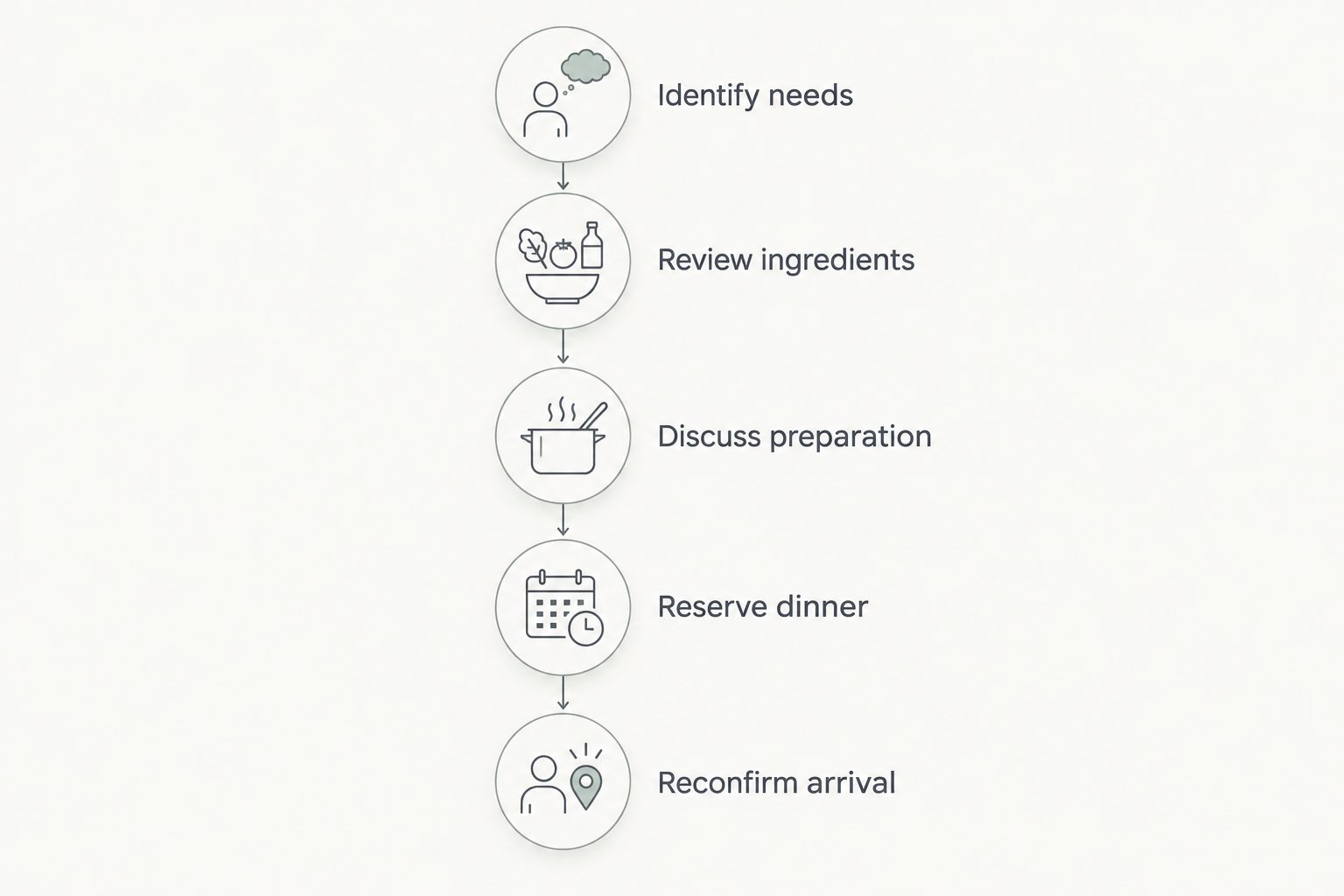
For your 2026 dinner plan, follow this sequence before committing the group to a reservation.
1. Identify needs
Ask each guest to describe their requirement in their own words. Keep food allergies, celiac disease, intolerances, and personal preferences separate rather than collecting everything under a general request for healthy food.
You need the specific ingredient or dietary rule, not the person’s medical history. A guest who avoids dairy needs a different conversation from someone who avoids meat, and a guest with celiac disease needs more than an assurance that a dish contains no obvious bread.
Have the affected guest approve the wording you will share with the restaurant. If they prefer to speak directly with staff, let them handle that conversation rather than translating a requirement you do not fully understand.
2. Review ingredients
Read the current menu for dishes worth discussing, not dishes you have already declared suitable. Identify sauces, fillings, garnishes, and accompaniments that need clarification.
Italian cooking can include wheat, milk, eggs, fish, and other allergens. A familiar dish name does not tell you the complete recipe, and removing a visible ingredient does not establish that the remaining food meets a guest’s needs.
For example, ask whether a sauce contains dairy rather than assuming its color tells you the answer. Ask about the filling and dough separately when discussing filled pasta. These are questions about preparation, not claims about any restaurant’s current menu.
3. Discuss preparation
Contact the restaurant before booking and explain the exact requirement. For allergies or celiac disease, include questions about shared equipment, utensils, cooking surfaces, and the risk of cross-contact.
Ingredient checking and preparation checking are different tasks. A dish without an allergen in its recipe can still come into contact with that allergen during cooking or service.
Ask staff to explain what the kitchen can do, then let the guest decide whether that answer meets their needs. An unclear answer is a reason to pause the booking, not a reason to reinterpret the restriction. Do not ask the guest to accept a substitute that they have not approved.
4. Reserve dinner
Once the dietary conversation is complete, choose your preferred Wednesday or Thursday and use the restaurant’s reservation process. Keep Massapequa Park as the destination rather than treating the search as an open-ended tour of Long Island.
For guests within a 15-mile radius of ZIP 11762, agree on the restaurant and meeting plan before coordinating everyone’s travel. A nearby destination does not remove the need to confirm dietary requirements, but it gives your group a clear local anchor.
Record the requirement in the reservation when that option is provided. Keep the wording consistent with the conversation you already had; do not shorten a specific food allergy into a vague request for a special meal.
5. Reconfirm arrival
Tell your server about the requirement before ordering, even if you discussed it during booking. Ask staff to verify the chosen dish and any changes to its ingredients or preparation.
Treat starters, drinks, accompaniments, and dessert as separate decisions. Confirmation about a main course does not automatically cover everything else brought to the table.
If a plate arrives with an unexpected ingredient, stop and ask staff to check it. For a food allergy, picking off the ingredient is not a substitute for an appropriate kitchen response. Keep the conversation calm, specific, and focused on the guest’s requirement.
Why this matters for a local dinner
A welcoming Italian dinner should give everyone a place in the plan. Guests should not have to explain a restriction for the first time while the rest of the table is ready to order.
For a 2026 gathering, make dietary planning part of choosing the restaurant, alongside the evening, group size, and occasion. This keeps the focus on modern Italian food and time together without asking anyone to improvise a meal that does not meet their requirements.
Mangiabeviny offers Italian dining, cocktails, and wine in Massapequa Park. Those are reasons to consider the restaurant for your evening; they are not evidence of a particular allergy protocol or dietary menu. Choose the setting for the occasion, then confirm the food for the guest.
Which dietary requirement are you planning around?
Different needs require different questions. This comparison helps you prepare the conversation; it does not certify any dish or restaurant as suitable.
| Requirement | Best for | Useful starting point | Limitation to resolve |
|---|---|---|---|
| Vegetarian preference | Guests avoiding meat and fish | Ask about stocks, sauces, fillings, and garnishes | A vegetable-led dish can contain animal-derived ingredients |
| Vegan preference | Guests avoiding animal-derived ingredients | Check dairy, eggs, stocks, sauces, and accompaniments | Removing cheese alone does not establish that a dish is vegan |
| Lactose intolerance | Guests managing lactose intake | Ask which ingredients contain lactose | Lactose intolerance is not the same requirement as milk allergy |
| Milk allergy | Guests avoiding milk proteins | Discuss ingredients and cross-contact with staff | Lactose-free does not mean milk-free |
| Celiac disease | Guests who require gluten avoidance | Discuss gluten-containing ingredients and preparation | A gluten-free ingredient does not resolve shared-equipment concerns |
| Other food allergy | Guests avoiding a specific allergen | Name the allergen and ask about the complete dish | Menu names and visible ingredients do not establish suitability |
The benefit of this approach is precision: staff receive a clear question rather than a broad request to make something healthier. Its limit is equally important: a planning checklist cannot replace the kitchen’s answers or the guest’s own requirements.
Vegetarian and vegan dinners
Best for guests following an ingredient-based dietary preference: start with the complete recipe, including components that are not visible on the plate. Ask about stock, sauce, filling, cooking ingredients, and finishing touches.
Vegetarian and vegan are not interchangeable. Explain the actual boundary instead of assuming the restaurant uses the same definition as your guest. If a substitution is suggested, check the whole revised dish rather than just the ingredient being removed.
Gluten avoidance and celiac disease
Best for guests discussing celiac disease: ask about both ingredients and preparation. A request to leave out bread does not address gluten in a sauce, coating, or shared cooking process.
Use the phrase celiac disease when that is the guest’s requirement. Do not describe it as a preference to simplify the conversation. For your 2026 reservation, obtain a clear answer about the proposed meal before treating it as a workable choice.
Food allergies and intolerances
Best for guests with a diagnosed food allergy: name the allergen directly and include preparation questions. Do not use intolerance and allergy as interchangeable descriptions.
The FDA identifies 9 major food allergens in the United States: milk, eggs, fish, crustacean shellfish, tree nuts, peanuts, wheat, soybeans, and sesame. Its food-allergen guidance provides that list for your 2026 planning, but allergies are not limited to those foods. Always state the guest’s actual allergen rather than relying on a standard list.
Why dietary planning varies between dinner groups
The restaurant conversation should match the group you are bringing. These factors change what you need to confirm:
- The requirement: an ingredient preference and a food allergy need different preparation discussions.
- The complete recipe: sauces, stocks, fillings, and garnishes need checking alongside the main ingredient.
- The cooking process: shared utensils, equipment, and surfaces matter when discussing cross-contact.
- The serving format: shared plates create additional questions about serving utensils and food touching.
- The occasion: a regular dinner, private celebration, and catered meal require separate confirmation of the food being served.
For visiting family, ask about requirements before announcing the restaurant choice. For a business dinner, let guests share dietary needs privately with the organizer or speak to staff themselves.
A Wednesday or Thursday reservation is a scheduling choice, not a promise of quieter service or easier accommodation. Select the evening that works for your group, then confirm the same details you would for any other dinner.
Can you share starters when someone has a food allergy?
Shared starters require a separate discussion about ingredients, serving utensils, and cross-contact. A main course that meets a guest’s requirements does not establish that a shared dish does too.
Ask the affected guest what arrangement they need and confirm it with staff. Separate ordering can simplify the table’s choices, but separate plates alone do not answer questions about kitchen preparation.
Can you plan dinner and drinks around dietary needs?
Dinner and drinks both need checking when ingredients are relevant to a guest’s restriction. Do not assume that confirming the food covers a cocktail, garnish, mixer, or other drink component.
Mangiabeviny offers cocktails and wine alongside Italian dining. Keep dinner as the center of the evening, and ask about a particular drink separately when needed. Nobody needs to order alcohol to participate in the occasion.
What should you confirm for a private event or catered meal?
Confirm the proposed menu, each guest’s requirements, and how the food will be prepared and served. A successful restaurant dinner does not automatically establish that a different event menu meets the same needs.
Mangiabeviny offers catering as well as restaurant dining. Discuss the actual service you are planning rather than carrying assumptions from one format to another. For a 2026 celebration, collect dietary requirements before finalizing the food and tell the organizer which questions remain unresolved.
Plan your Wednesday or Thursday dinner
Discuss dietary requirements first, then use the website’s OpenTable link to reserve in Massapequa Park.
FAQ
How do I choose Italian restaurants in Massapequa for dietary needs?
Choose by confirming ingredients and preparation before reserving, not by assuming a menu description covers your needs. Make Massapequa Park your local anchor and discuss the exact requirement with the restaurant.
Can I assume a dish without pasta is gluten-free?
No, a dish without pasta is not automatically gluten-free. Sauces, coatings, other ingredients, and preparation methods still need checking, particularly for celiac disease.
Is lactose-free food suitable for someone with a milk allergy?
Lactose-free food is not automatically suitable for someone with a milk allergy. Milk allergy concerns milk proteins, so describe the allergy directly and confirm ingredients and preparation.
Should I put a food allergy in my dinner reservation?
Include the food allergy in your reservation when that option is provided, but also discuss it directly with staff. Reconfirm the requirement with your server before ordering.
How do I reserve a Wednesday or Thursday dinner at Mangiabeviny?
Use the OpenTable reservation link on the Mangiabeviny website after discussing your dietary requirements. Select your preferred Wednesday or Thursday without assuming a particular time or accommodation is guaranteed.
Can a vegetarian dish contain ingredients I need to avoid?
Yes, a vegetarian dish can still contain dairy, eggs, wheat, nuts, or other ingredients relevant to your needs. Confirm the complete recipe rather than treating vegetarian as an allergy label.
What should I do if my meal arrives with an unexpected ingredient?
Stop eating and ask staff to check the dish against your stated requirement. For a food allergy, removing the visible ingredient does not resolve possible cross-contact.
Do I need to check dietary requirements again for catering?
Yes, confirm dietary requirements for the actual catered menu and serving arrangement. A previous restaurant meal does not establish that a different dish or service format meets the same needs.
One last thing
The detail to confirm last is the dish as it will actually be served. A substitution changes the recipe, and the replacement ingredient deserves the same questions as the original.
Before ordering, repeat the final choice and its agreed changes to your server. Let the guest with the dietary requirement hear and approve that description. This keeps the reservation conversation, the order, and the plate aligned without turning dinner into a group debate.
Your goal is a warm evening in Massapequa Park with a meal each guest has chosen confidently. Start with clear requirements, keep Wednesday or Thursday in the plan, and reserve only after the important food questions have answers.