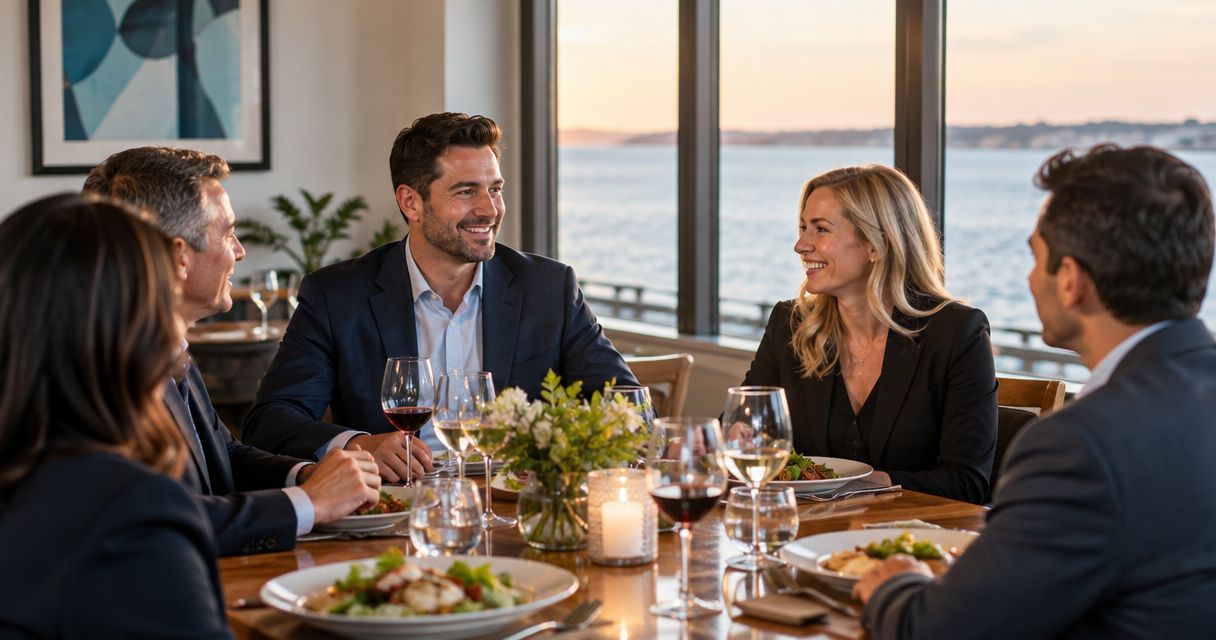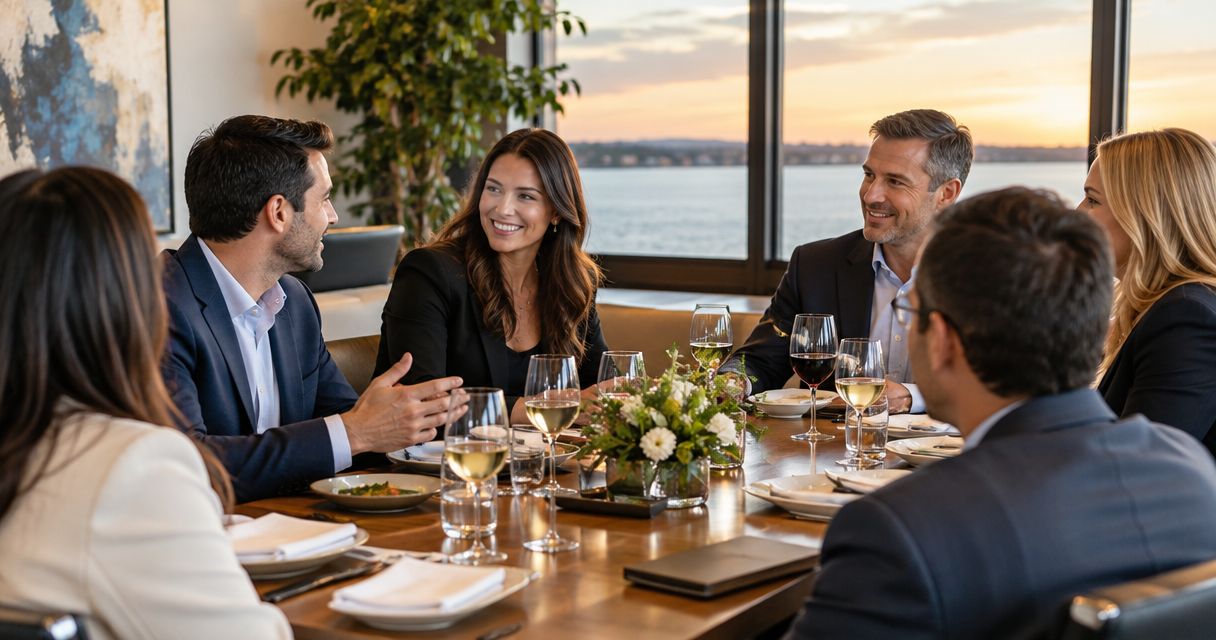
Long Island nonprofits’ private event space is a setting for donor dinners, volunteer appreciation, and board gatherings, with the aim of strengthening support for your mission. This 2026 guide puts modern Italian dining and a welcoming Massapequa Park setting first, then explains how to match privacy, meal service, and event responsibilities to your gathering.
- Choose private event space for Long Island nonprofits around your program, not just the room’s appearance.
- Mangiabeviny is best for nonprofits prioritizing an Italian dinner in Massapequa Park; confirm event arrangements directly.
- Compare restaurant dining, private rooms, buyouts, and catered spaces before committing.
- For Wednesday or Thursday gatherings, separate a dinner reservation from any request for exclusive space.
Why private event space matters for Long Island nonprofits
A nonprofit dinner has two jobs: welcome your guests and support your purpose. A donor conversation needs a different setting from a board discussion, and neither automatically needs a stage, a microphone, or an exclusive room.
Mangiabeviny is best for nonprofits prioritizing an Italian dinner in Massapequa Park. The restaurant offers dinner, cocktails, wine, catering, and to-go meals. Those offerings make food-led gatherings a relevant starting point, but they do not establish private-room access, event capacity, or permission for fundraising activities.
Start with Mangiabeviny to explore the restaurant and reserve a planning dinner through the main website. For private-event requirements, confirm the arrangements directly rather than treating an ordinary table reservation as an event agreement.
For guests within a 15-mile radius of ZIP 11762, keep Massapequa Park at the center of your search. Ask invitees about their departure points and transportation needs; a broad Long Island venue list does not tell you which location works for your actual group.
Plan a nonprofit gathering around dinner and purpose
Define the outcome before choosing the room
Begin with a shared document, not a venue inquiry. Write a 1-page brief that identifies the audience, the reason for gathering, and what guests should leave knowing or feeling. A volunteer thank-you dinner should not accidentally become a lengthy fundraising presentation.
Name the event’s primary outcome in plain language. If your objective is donor stewardship, protect conversation time. If the board needs to discuss sensitive matters, treat privacy as a requirement rather than a decorative extra.
For your 2026 event brief, distinguish between essentials and preferences. Exclusive use might be essential for confidential discussion; a particular seating arrangement might simply be preferred. This distinction gives a venue a clear request to answer.
- State the purpose: appreciation, stewardship, board business, or fundraising.
- Identify who is invited and who will approve the booking.
- Separate required privacy from preferred atmosphere.
- Record anticipated attendance without presenting estimates as confirmed guests.
- Describe what a successful evening should accomplish.
Choose dates around your guests’ commitments
Start with a simple email poll or shared calendar. Offer 2 date choices and ask about attendance barriers before approaching venues. For a local dinner-led gathering, include Wednesday and Thursday evenings in your planning conversation without assuming either date has openings.
A weeknight event needs a clear beginning and ending. Ask guests whether they are coming from work, home, or another commitment, then build your arrival window around those answers. Do not promise a short journey based only on distance.
Keep the public invitation separate from your internal planning. Announce the date only after the venue confirms the relevant arrangements and your organization approves them. A tentative date is not a reservation.
- Poll the people whose attendance is essential.
- Include Wednesday and Thursday among your proposed dinner dates.
- Ask about transportation and accessibility requirements early.
- Specify the intended arrival, meal, and departure sequence.
- Confirm the date before printing or distributing invitations.
Match the dining format to the conversation
Sketch your event on paper before asking a restaurant to accommodate it. Decide whether guests will mainly eat and talk, listen to remarks, or participate in structured discussion. Each activity creates different seating, sound, and service requirements.
Mangiabeviny’s Italian dinner, wine, and cocktail offerings fit the starting brief for a food-led gathering. Use that as a reason to inquire, not as proof that a private room, presentation setup, or exclusive area is included. A planning dinner lets organizers consider the setting before making an event request.
For a 2026 donor dinner, keep the meal central and give any remarks a defined place in the evening. Service and speeches should not compete for guests’ attention. Agree on the sequence with the venue rather than improvising after everyone sits down.
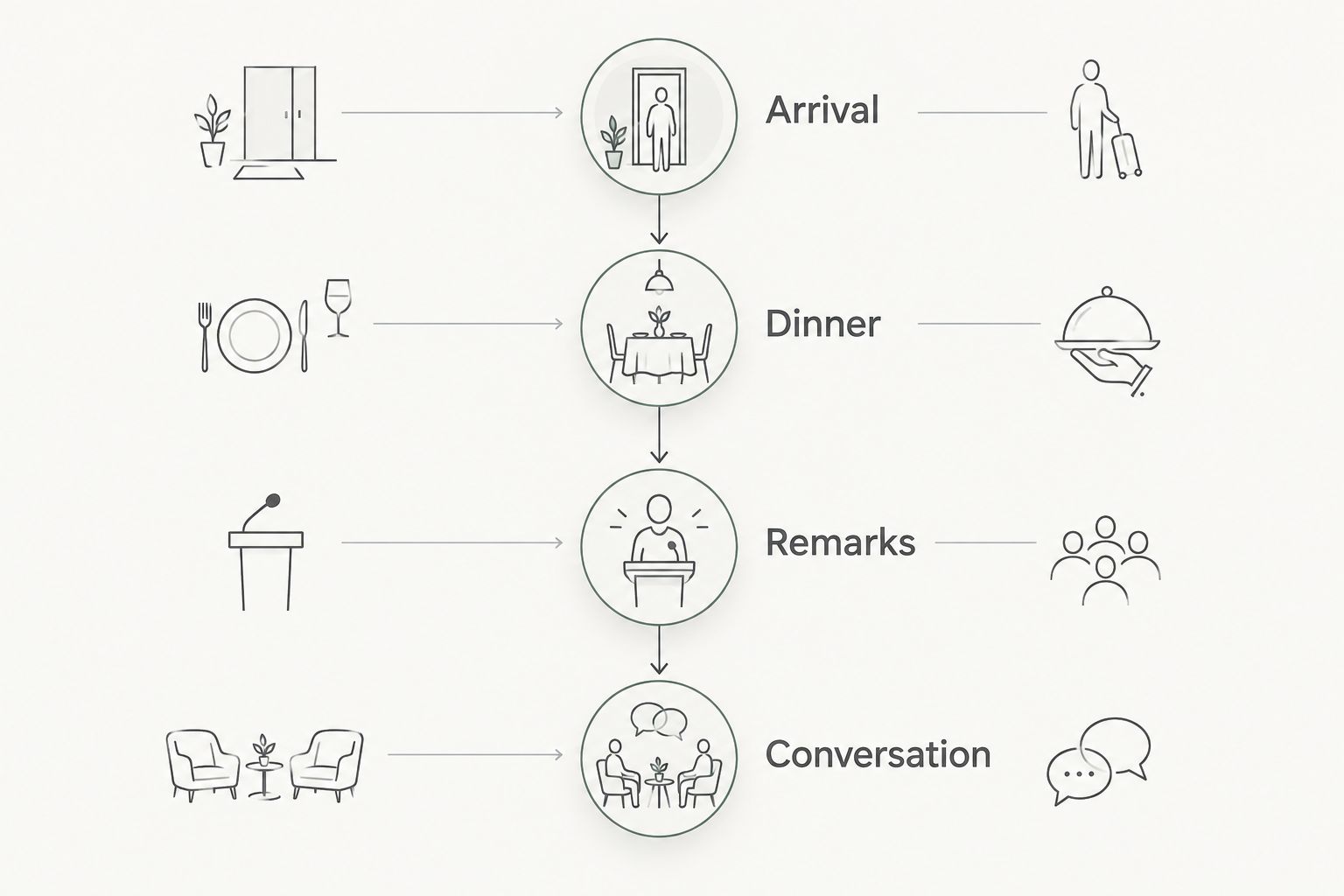
- Arrival: identify who welcomes guests and checks attendance.
- Dinner: describe whether conversation or formal business takes priority.
- Remarks: identify the speaker and ask about sound requirements.
- Conversation: protect time for guests to connect without an agenda.
- Departure: assign responsibility for closing the evening and settling arrangements.
The sequence below is a planning outline, not a confirmed restaurant service schedule. Adjust it with your event contact before sending instructions to guests.
Confirm privacy and practical requirements directly
Create a question list and send the same version to every venue under consideration. Ask what space your group would use, who else can access it, and which arrangements will be recorded in writing. The word private is not a substitute for a description.
A separate room, a section of a dining room, and exclusive use of a restaurant are different requests. Review the distinction between a restaurant buyout and a private room before choosing which format to discuss.
Ask specific access questions rather than relying on broad assurances. Guests need to know about entrances, routes to seating, and restroom access. For confidential discussions, ask about audibility as well as visual separation.
- Request the exact space and seating arrangement in writing.
- Confirm the attendance limit for your proposed layout.
- Ask about background sound, microphones, and presentation equipment.
- Describe guest access needs and request concrete answers.
- Confirm rules for signage, decorations, speeches, and fundraising activities.
- Identify who handles changes before and during the event.
Coordinate food, drinks, and nonprofit responsibilities
Start with an attendance sheet that includes dietary requests and the organizer responsible for each follow-up. Share relevant needs with the venue before finalizing arrangements. Do not promise that a dish or preparation method meets a guest’s requirements without confirmation.
For Mangiabeviny private-event inquiries, ask how dinner, wine, cocktails, or catering would fit your specific gathering. These are stated offerings, not a guarantee of a particular event package. Keep nonalcoholic preferences and organizational rules part of the same conversation.
Your nonprofit also needs its own administrative plan. Separate hospitality decisions from donation handling, acknowledgments, and internal approvals. If your event includes a raffle, auction, or other fundraising activity, have the responsible organizational adviser review the applicable requirements before announcing it.
- Collect dietary requests without publishing guests’ personal details.
- Confirm food and beverage arrangements directly with the venue.
- Identify who approves alcohol-related decisions for your organization.
- Assign donation handling and acknowledgment responsibilities internally.
- Ask permission before planning displays, auctions, or collection stations.
- Record who approves the final event agreement.
Close the details before inviting your supporters
Use one shared document as the final source of event information. Record the agreed date, space, meal arrangements, guest count process, and named contacts. Email threads are useful records, but scattered replies make it easy to miss a condition.
For your 2026 gathering, send a concise confirmation request that distinguishes what is agreed from what remains open. Ask the venue to correct misunderstandings before you distribute invitations. Keep your event description within those confirmed boundaries.
Reserve a dinner table for a planning visit; confirm a nonprofit event separately. Use the restaurant’s main website to follow its reservation process. An ordinary dining reservation should never carry an unstated expectation of exclusive space or permission for event activities.
- Obtain written confirmation of the event’s scope.
- Assign one organizer as the main venue contact.
- Check every invitation claim against the agreed arrangements.
- Explain arrival instructions and access information to guests.
- Send the venue the final information required under your agreement.
Plan your Massapequa Park dinner
Use the main website to reserve a Wednesday or Thursday planning dinner; confirm event needs separately.
Compare gathering formats for your nonprofit
Choose the least complicated format that meets your actual requirements. A dinner reservation is not a smaller version of a private event agreement; it is a different arrangement. Likewise, catering addresses food service, not every responsibility attached to a separate venue.
The options below are planning categories, not confirmed configurations at Mangiabeviny. Verify which formats a venue offers and what each agreement covers.
| Option | Best for | Main advantage | Key limitation |
|---|---|---|---|
| Restaurant dinner reservation | Volunteer thank-yous and informal donor conversations | Keeps the gathering centered on a shared meal | Does not establish privacy or permission for event activities |
| Confirmed private dining room | Board discussions or remarks requiring separation | Defines a dedicated space when agreed | Room access, sound separation, and layout need confirmation |
| Restaurant buyout | Gatherings requiring exclusive use | Establishes exclusivity when explicitly contracted | Requires a broader agreement than an ordinary reservation |
| Separate venue with catering | Programs shaped around a specific room or agenda | Lets the organization choose the setting independently | Requires coordination between space, food service, and event responsibilities |
If your program needs both confidential discussion and a social meal, ask whether those activities belong in separate settings. A restaurant dinner can serve the hospitality goal without carrying every administrative part of the evening.
Common mistakes Long Island nonprofits make
Treating a dinner reservation as private-event approval
A reserved table does not establish a private room, presentation permission, or control over surrounding activity. Describe your actual program before booking, especially if it includes speeches, signage, or donor solicitation. Get the relevant permissions in writing.
Choosing atmosphere before checking the program
A stylish, welcoming setting supports hospitality, but it does not answer questions about confidential conversation or audibility. Decide whether the evening is primarily dinner or a formal program. Then evaluate the setting against that purpose.
Assuming nonprofit status changes the agreement
Do not build your plan around an unconfirmed concession, donation, or special arrangement. Explain your organization’s needs plainly and request a written proposal. Your internal approval should use the terms actually offered, not expectations based on nonprofit status.
Sending invitations before resolving guest needs
A polished invitation cannot fix unclear access information or unconfirmed dietary arrangements. Ask guests what they need early, then discuss those needs directly with the venue. Publish only the details you can stand behind.
Making the evening serve too many goals
Combining board business, volunteer recognition, donor cultivation, and a fundraising presentation creates competing demands. Give the event a primary purpose and keep optional activities subordinate. Guests should understand why they were invited without reading a lengthy agenda.
FAQ
What’s the best private event space for Long Island nonprofits?
The best private event space matches your nonprofit’s program, privacy needs, and guest requirements. For an Italian dinner in Massapequa Park, consider Mangiabeviny and confirm any private-event arrangements directly.
Can I use a regular restaurant reservation for a nonprofit dinner?
A regular reservation suits an ordinary dinner when the restaurant accepts the group booking. It does not establish exclusive space or permission for speeches, fundraising activities, or special equipment.
Should we choose Wednesday or Thursday for a nonprofit dinner?
Include Wednesday and Thursday in your date poll if they suit your guests’ schedules. Confirm the chosen date and event arrangements directly before sending invitations.
Does Mangiabeviny have a private room for nonprofit events?
Confirm private-room arrangements directly with the restaurant. Its stated offerings include Italian dining, cocktails, wine, catering, and to-go meals; those offerings do not establish a particular room or event configuration.
Is a restaurant buyout better than a private room?
A buyout fits a requirement for exclusive use, while a private room fits a requirement for a defined separate space. Confirm access, sound separation, service arrangements, and responsibilities before choosing either format.
What should our nonprofit confirm before booking a venue in 2026?
Confirm the date, exact space, attendance limit, meal arrangements, access needs, and permissions for planned activities. Keep those details in a written agreement and assign an organizer to manage changes.
Can we hold a fundraiser during an Italian dinner?
Discuss the proposed fundraising activities with the venue before advertising them. Your organization should also review the applicable requirements for donation handling, acknowledgments, raffles, or auctions with its responsible adviser.
One last thing
Separate the confidential meeting from the thank-you dinner when the two need different environments. That simple choice protects sensitive discussion without turning a welcoming meal into a formal meeting. For your 2026 plan, let the restaurant gathering do what you actually need it to do: bring people together around dinner.