Choose a private room when your Long Island party needs a separate place to dine; choose a restaurant buyout when the event requires exclusive use of the agreed restaurant space. For a 2026 celebration, make the decision around privacy, dinner service and guest movement—not the venue label, which does not establish exactly what your group controls.
- For private party venues Long Island searches, choose by exclusive-use boundaries, not the word private.
- A private room suits a dinner-centered celebration; a restaurant buyout suits an event requiring broader exclusive use.
- Mangia E Bevi is a Massapequa Park option for modern Italian dinner planning; confirm event arrangements directly.
- Get the room boundaries, drinks arrangements and event timing in writing before committing.
Restaurant buyout or private room for your Long Island party?
A private room is the better fit when dinner is the event. A buyout is the better fit when controlling the space is essential to the event. Neither description replaces a written agreement defining which areas belong to your party.
Start locally. For guests around Massapequa Park and within 15 miles of ZIP 11762, consider the journey home alongside the setting, meal and drinks. Mangia E Bevi offers Italian dining, cocktails and wine in Massapequa Park; discuss your event requirements directly rather than treating an ordinary table reservation as an exclusive-space booking.
| Format | Best for | Main advantage | Main limitation | Confirm before booking |
|---|---|---|---|---|
| Private room | A dinner-centered gathering needing separation | Gives the celebration a defined dining space | Areas outside the room can remain shared | Doors, access routes, restrooms and sound separation |
| Restaurant buyout | A celebration requiring broader exclusive use | Lets the agreement establish a larger exclusive footprint | Requires more decisions about space, timing and service | Exact areas included, access period and permitted activities |
These are booking formats, not confirmed offerings at every restaurant. Ask the venue to describe the arrangement it can provide for your date and group.
Why this matters
A restaurant celebration brings together food, conversation and hospitality. Your booking should protect those priorities without turning a dinner into an unnecessarily complicated production.
The wrong fit starts with an assumption: that private means silent, that a buyout includes every area, or that a group reservation gives you permission to rearrange the room. Replace each assumption with a specific question. For a 2026 event, keep the final answers together with the current agreement so earlier conversations do not become competing versions of the plan.
Private room: best for a dinner-centered celebration
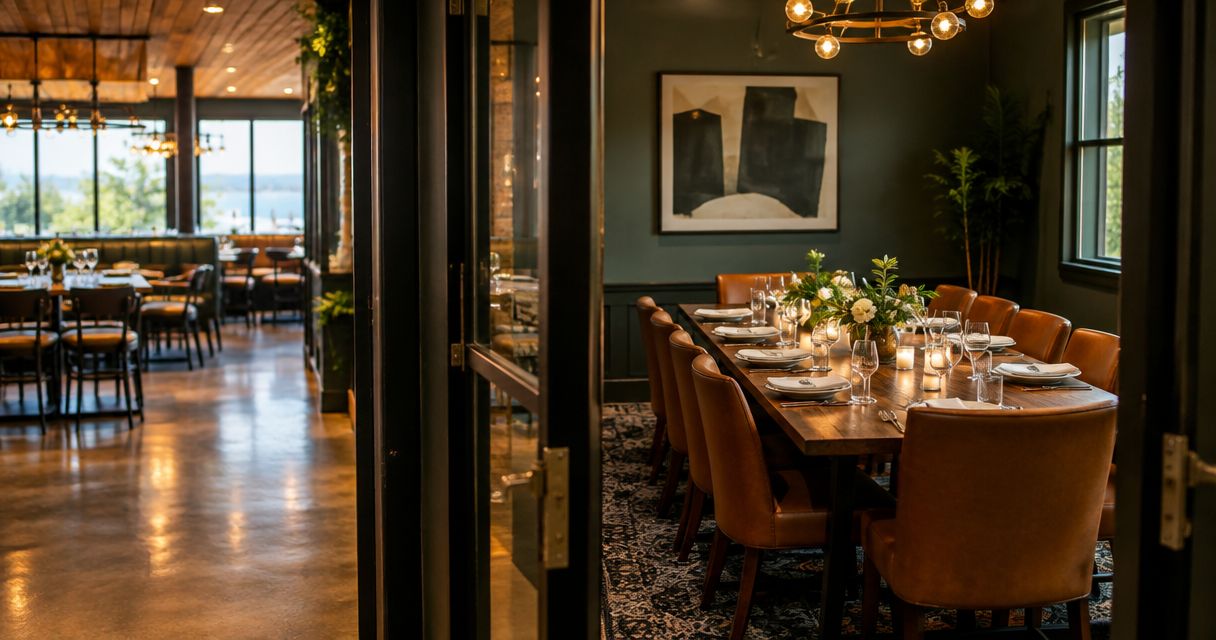
Choose a private room when your guests mainly need somewhere to sit together, enjoy dinner and hear one another. A rehearsal dinner, family birthday or business gathering can follow that shape without requiring control of the entire restaurant.
The advantage is focus. You can plan the meal and the moments around it while keeping the event centered on a defined space. The limitation is the boundary: other diners, staff routes or shared facilities can still affect the experience outside that room.
Ask what separates the room from surrounding dining areas. A closed door, an open entrance and a screened section are different arrangements; none should be assumed from a photograph or the phrase private dining.
Choose the room only after its boundaries match your expectations. If a confidential conversation or uninterrupted speech matters, ask about sound and interruptions explicitly. Visual separation alone does not answer either question.
Restaurant buyout: best for an event needing exclusive use
Choose a restaurant buyout when your celebration depends on controlling the agreed space rather than simply gathering around a table. Examples include a planned sequence of arrivals, dinner and speeches, or a host who needs guests to move between designated areas without unrelated diners sharing them.
The advantage is the ability to define a broader event footprint in the agreement. The limitation is the planning responsibility: you still need clear decisions about access, service, drinks, setup and the end of the event.
Do not let the word buyout do the work of a floor plan. Ask whether the agreement covers the dining room, bar, entrance and any other areas relevant to your celebration. Identify anything excluded.
Book a buyout for a specific requirement, not for the impression of a larger occasion. If your guests will spend the evening seated over dinner, a separate room deserves a fair comparison before you choose broader exclusive use.
Why the right format varies
The best format depends on what your party needs to do. Use these factors to compare actual proposals rather than relying on venue descriptions:
- Privacy: Decide whether you need visual separation, conversational privacy or exclusive access. Ask how the proposed space delivers each requirement.
- Dinner service: Establish whether guests will eat together, choose individually or follow another agreed arrangement. Confirm the current food options directly.
- Guest movement: Trace the route from arrival to seating, drinks and restrooms. Identify where the group would pass through shared areas.
- Event program: List speeches, presentations, decorations or entertainment you want to include. Get permission before arranging them.
- Timing: Separate guest arrival, dinner, any planned remarks and departure. Ask how setup and collection fit around those stages.
- Drinks arrangements: Confirm how cocktails, wine and other beverages will be ordered and handled. A bar on the premises does not establish your event's drinks terms.
For 2026 planning, compare written responses against the same list. A proposal that answers your essential questions is more useful than an appealing description that leaves the event boundaries unclear.
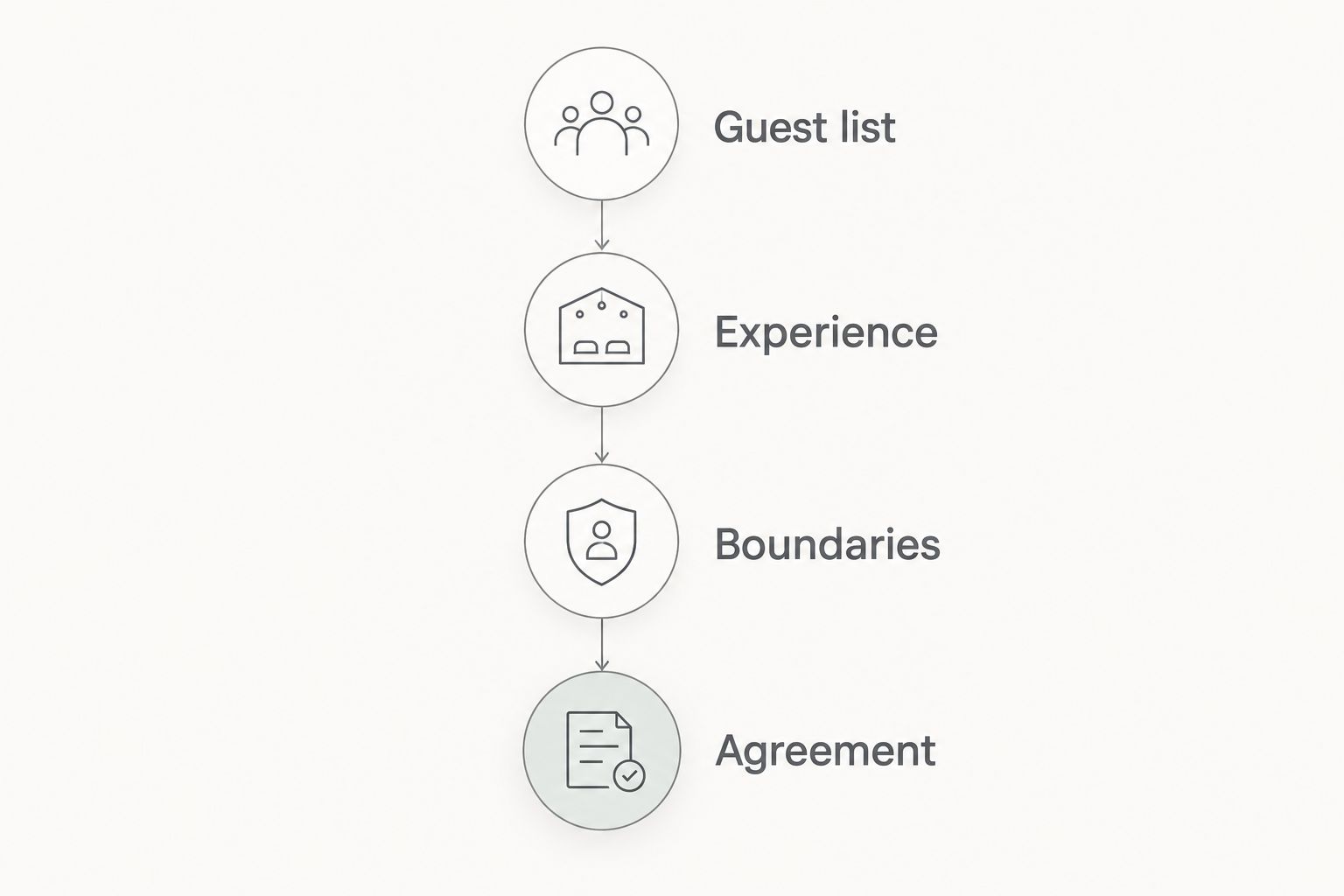
How to compare the options before you commit
Start with the guest list
Write down the expected attendance and the people whose needs affect the layout. Include children, guests using mobility aids and anyone who needs seating close to an entrance or restroom.
Ask the restaurant to assess the proposed arrangement for your actual group. A capacity figure alone does not explain whether the layout supports the kind of dinner you want.
Define the experience
Describe the evening in plain language: a seated Italian dinner, conversation over wine, a family toast or a business presentation. Put the meal first, then identify anything that changes how the space must work.
This keeps the discussion practical. Instead of asking whether a venue is suitable for parties, ask whether the proposed arrangement supports the specific moments you are planning.
Confirm the boundaries
Request a written description or marked layout showing the space included. Ask where other guests can be present and how staff will move through the event.
Check the arrival route as carefully as the dining area. A room can meet your seating needs while the entrance or shared route requires a different plan for greeting guests.
Review the agreement
Read the event terms against your original requirements. Confirm food and drinks arrangements, timing, payment terms, changes, cancellation conditions and responsibility for anything you bring.
Keep the final 2026 event details in one approved document. If an important promise remains only in a conversation, ask for written confirmation before relying on it.
Plan around Massapequa Park, not just Long Island
Long Island is a broad search area. Start with where your guests are actually coming from, especially when the group is centered around Massapequa Park and nearby communities.
For local hosts within the 15-mile audience around ZIP 11762, keep the invitation specific: restaurant name, town, confirmed arrival time and any instructions the venue provides. Do not assume every guest knows the location because the celebration is local.
Mangia E Bevi is best for local hosts whose starting point is modern Italian dining in Massapequa Park. Its dinner, cocktail and wine offering makes the meal a relevant starting point; private-space arrangements still require a direct conversation.
If your date is flexible, include Wednesday and Thursday in the inquiry. Those evenings are useful dates to discuss for a dinner-led celebration, without assuming different terms or an open booking calendar.
Keep food and drinks at the center
An attractive room cannot answer the most important dining questions. Ask what the restaurant can serve for your event, how guests will order and how the meal will progress.
Share dietary needs before settling the plan. Describe the requirement clearly and ask the restaurant to explain what it can accommodate, including any relevant preparation concerns. Never promise a guest that a dish or adjustment is possible before receiving confirmation.
For drinks, distinguish between what guests can order and what the host has agreed to provide. Ask how wine selections, cocktails and nonalcoholic requests fit the event arrangement. Keep the answer with the dinner plan so the host and restaurant are working from the same expectations.
A dinner-centered celebration does not need an elaborate program. It needs a meal and service arrangement that leave room for the people at the table.
Is a private room enough for a rehearsal dinner?
A private room is enough when the rehearsal dinner needs shared seating, conversation and agreed time for remarks. Confirm how speeches fit around service and whether other activity outside the room affects them.
If the gathering includes a separate welcome reception or movement between spaces, describe that sequence before choosing the format. The event's flow—not its title—determines whether a room meets the need.
Do you need a restaurant buyout for a birthday party?
A restaurant buyout is appropriate when the birthday celebration requires exclusive use of the agreed space. A seated birthday dinner does not, by itself, establish that requirement.
Write down what would be impossible in a separate room. If nothing essential appears on that list, compare the room arrangement before committing to a buyout.
Can you reserve dinner before deciding on private space?
An ordinary dinner reservation and an exclusive-space event are different arrangements. Reserve a table when you want to experience the dining occasion, but discuss event needs separately and confirm them in writing.
For a Wednesday or Thursday dinner at Mangia E Bevi, use the main website to follow the restaurant's OpenTable reservation route. A dinner visit can help you assess your preferences; it does not establish event access, capacity or terms.
Plan your Italian dinner
Use the main website to reserve a table, and discuss private-event requirements separately.
Questions to settle before sending invitations
Get clear answers to these 3 questions before describing the event to guests:
- What is exclusively ours? Name the room or areas, the access period and any shared routes or facilities. Use the same description in your own planning notes.
- What will dinner involve? Confirm the agreed food and drinks arrangements, dietary discussions and service sequence. Do not build invitations around unconfirmed menu details.
- What happens if plans change? Review the written conditions for attendance changes, timing changes and cancellation. Keep the agreed deadlines accessible to whoever is organizing the party.
Send invitations after the essential arrangements are settled. Your guests need a clear plan, not the unanswered questions from the booking conversation.
FAQ
What's better for a Long Island party, a private room or a restaurant buyout?
A private room is better for a dinner-centered gathering needing separation; a restaurant buyout is better when the celebration requires broader exclusive use. Confirm the exact boundaries and terms before choosing.
Does a private dining room mean nobody else can hear our party?
A private dining room does not establish sound privacy by itself. Ask about doors, surrounding activity and how speeches or confidential conversations would work.
Does a restaurant buyout include the bar?
A restaurant buyout includes the bar only when the agreement says it does. Ask which areas are exclusive and which, if any, remain shared or excluded.
Can I book a regular table for a private event?
A regular table reservation does not establish private-event rights. Discuss exclusive space, decorations, speeches and event service separately with the restaurant.
Where should I start looking near Massapequa Park?
Start with the meal, guest journey and space requirements in Massapequa Park. Mangia E Bevi offers Italian dining, cocktails and wine; confirm any proposed private-event arrangement directly.
Should I ask about Wednesday or Thursday for my dinner party?
Include Wednesday and Thursday when your date is flexible. Ask the restaurant about your specific date without assuming different terms or booking availability.
What should I tell the restaurant about dietary needs?
Tell the restaurant the specific dietary requirements before agreeing to the dinner plan. Ask what can be accommodated and confirm the arrangements before making promises to guests.
One last thing
Before choosing, ask the restaurant to walk you through the event from the first guest's arrival to the final departure. Follow the route, not just the room description.
For your 2026 celebration, that walkthrough is the final test: does the proposed space support the dinner you want, with clear boundaries and no essential assumptions left unresolved? Choose the format that answers that question cleanly.