Healthcare-team private dining is a restaurant gathering planned around clinical schedules, dietary needs and conversation, with the aim of bringing colleagues together outside work. For Long Island teams considering Massapequa Park in 2026, start with modern Italian food and a welcoming setting, then confirm the space, timing and arrangements your group needs.
- For private dining for long island healthcare teams, confirm privacy and shift-compatible timing before booking.
- Mangia E Bevi suits teams seeking an upscale Italian dinner in Massapequa Park; confirm private-event arrangements directly.
- Ask about Wednesday or Thursday dinner, dietary needs and alcohol-free choices without assuming availability.
- Choose a seated dinner, private room or catering according to attendance and the purpose of your gathering.
Why private dining matters for healthcare teams
A team dinner needs to work for the people attending, not just the person booking. Start with your colleagues’ actual schedules: who finishes together, who remains on duty and who needs to leave early. Build the evening around those answers rather than asking everyone to fit a fixed celebration format.
For guests within a 15-mile radius of ZIP 11762, Massapequa Park provides a local starting point for your search. Mangia E Bevi offers Italian dining, cocktails, wine, catering and to-go meals there. Mangia E Bevi is best for healthcare teams seeking an upscale Italian group dinner in Massapequa Park. A private room, exclusive use or a particular seating arrangement still requires direct confirmation.
For your 2026 gathering, make food and conversation the center of the plan. Drinks can complement dinner without defining it. Keep patient information, case discussions and sensitive workplace matters out of a social restaurant setting, regardless of how secluded the table appears.
How to plan your healthcare-team dinner
1. Define the purpose before choosing the space
Decide whether you are organizing a thank-you dinner, a colleague’s farewell, a new-team welcome or a departmental celebration. Those occasions need different amounts of structure. A relaxed meal does not need the same room setup as a dinner with remarks or presentations.
Create a short planning note in a shared document or email. No event software is necessary. State the occasion, expected attendance and the decisions that require employer approval before anyone commits to a booking.
Choose the least complicated format that serves the occasion. If the evening includes formal business, determine whether a restaurant setting is appropriate before comparing venues.
- Name one organizer to handle restaurant communication.
- Write a single-sentence purpose for the gathering.
- Separate invited guests from confirmed attendees.
- Identify any speeches, presentations or recognition moments.
- Confirm who can approve the booking and payment arrangements.
2. Build the date around shifts and travel
Ask colleagues for their actual arrival and departure constraints before selecting a date. A calendar invitation is not a substitute for checking the rota. Include anyone joining from another workplace or traveling from home, rather than assuming everyone starts from the same hospital or practice.
For a 2026 midweek dinner, put Wednesday and Thursday on your shortlist. These are planning choices, not promises of quieter service or open tables. Confirm the restaurant’s current hours and booking options for your intended date.
Use Massapequa Park as the meeting point, then ask whether the journey works for the invited team. A local address alone does not establish a convenient route for every guest.
- Offer 2 candidate dates before asking for a final commitment.
- Record the earliest realistic arrival time for each shift group.
- Ask guests to flag firm departure deadlines privately.
- Check transport and designated-driver plans where relevant.
- Set an attendance deadline before confirming the booking.
3. Match the dining setting to the conversation
Begin by asking what privacy means for this event. Some groups want a table together; others need separation from surrounding diners. A reserved table, semi-private area and enclosed private room are different arrangements, so describe the requirement rather than relying on the phrase private dining.
Once your requirements are clear, approach Mangia E Bevi about the dinner format. Its Italian dining, bar and lounge offering gives you a food-and-drink starting point, but does not establish room capacity, sound separation or exclusive access.
Get the space description in writing before treating it as private. For confidential clinical or employment discussions, use an appropriate workplace setting instead of incorporating them into dinner.
- Ask whether the proposed area is shared, separated or enclosed.
- Request the seating layout for your confirmed group.
- Explain whether everyone needs to hear brief remarks.
- Ask about music and surrounding activity during your proposed time.
- Confirm accessible entry and seating requirements directly.
4. Agree on the meal before adding extras
Start with a written list of dietary needs, collected discreetly from guests. Distinguish allergies from preferences and other dietary requirements. Pass relevant information to the restaurant rather than asking a colleague to interpret ingredients or preparation methods.
Review the restaurant’s current information and ask which arrangements suit your group. Do not promise particular dishes, substitutions or preparation safeguards until the restaurant confirms them. The guide to planning an Italian dinner with dietary needs in Massapequa provides a focused next step for that conversation.
Keep the drinks plan equally clear. Wine and cocktails can be part of dinner, while guests who do not drink should be able to participate without explanation.
- Collect dietary requirements through a private reply or form.
- Ask the restaurant to explain how it handles each allergy request.
- Confirm the meal format and any ordering deadlines.
- Ask about current alcohol-free drink choices.
- Check employer rules before including alcoholic drinks in a hosted event.
5. Confirm the booking and payment responsibilities
A table reservation and a private-event agreement are not interchangeable. For a straightforward dinner, use the restaurant’s booking route. For space requirements, group arrangements or additional requests, obtain direct confirmation that those details are included.
Reserve a table through the OpenTable reservation link on the main website. If you need private-event arrangements, ask how those should be confirmed rather than assuming the table reservation covers them.
For your 2026 booking, keep the agreed details together in one email thread. Read the current terms before accepting them, and make sure the person responsible for payment understands what has been agreed.
- Confirm the date, arrival time and guest count in writing.
- Ask how changes to attendance must be submitted.
- Request the applicable cancellation and booking terms.
- Clarify billing, receipts and any employer documentation requirements.
- Record which requests remain unconfirmed before inviting the full team.
6. Send a useful invitation and keep attendance current
Write the invitation for someone reading it between tasks. Put the date, meeting place, arrival time and response deadline first. Follow with the purpose of the dinner and a direct way to raise dietary or access needs privately.
Maintain one guest list rather than separate counts in messages, calendars and spreadsheets. When someone changes plans, update the restaurant through the designated organizer. Do not assume an empty chair or an additional guest leaves the arrangements unchanged.
For a Wednesday or Thursday dinner, tell colleagues whether arrival is coordinated or staggered. That helps the restaurant understand your request without promising that any particular service arrangement is possible.
- Include the restaurant name and Massapequa Park location.
- State the confirmed start and planned finish.
- Explain how guests should report a late arrival.
- Provide one private contact for dietary and access questions.
- Send the final attendance count through the agreed channel.
7. Keep the evening focused on the team
A successful team dinner does not need a crowded agenda. Let the meal carry the evening, with brief acknowledgments if they suit the occasion. Ask the restaurant in advance about anything beyond ordinary dining, including decorations, outside items or presentations.
Before guests arrive, give the organizer a short final checklist: attendance, dietary communication, seating requests and billing responsibility. During dinner, use that organizer as the restaurant’s contact so staff do not receive conflicting instructions.
Finish with appreciation, not another meeting. If something needs workplace follow-up, schedule it separately instead of turning a social gathering into an unplanned discussion of operations.
- Reconfirm any agreed recognition moment before the event.
- Keep speeches separate from confidential workplace matters.
- Direct seating or service questions through the organizer.
- Respect guests’ stated departure deadlines.
- Thank attendees without pressuring them to continue elsewhere.
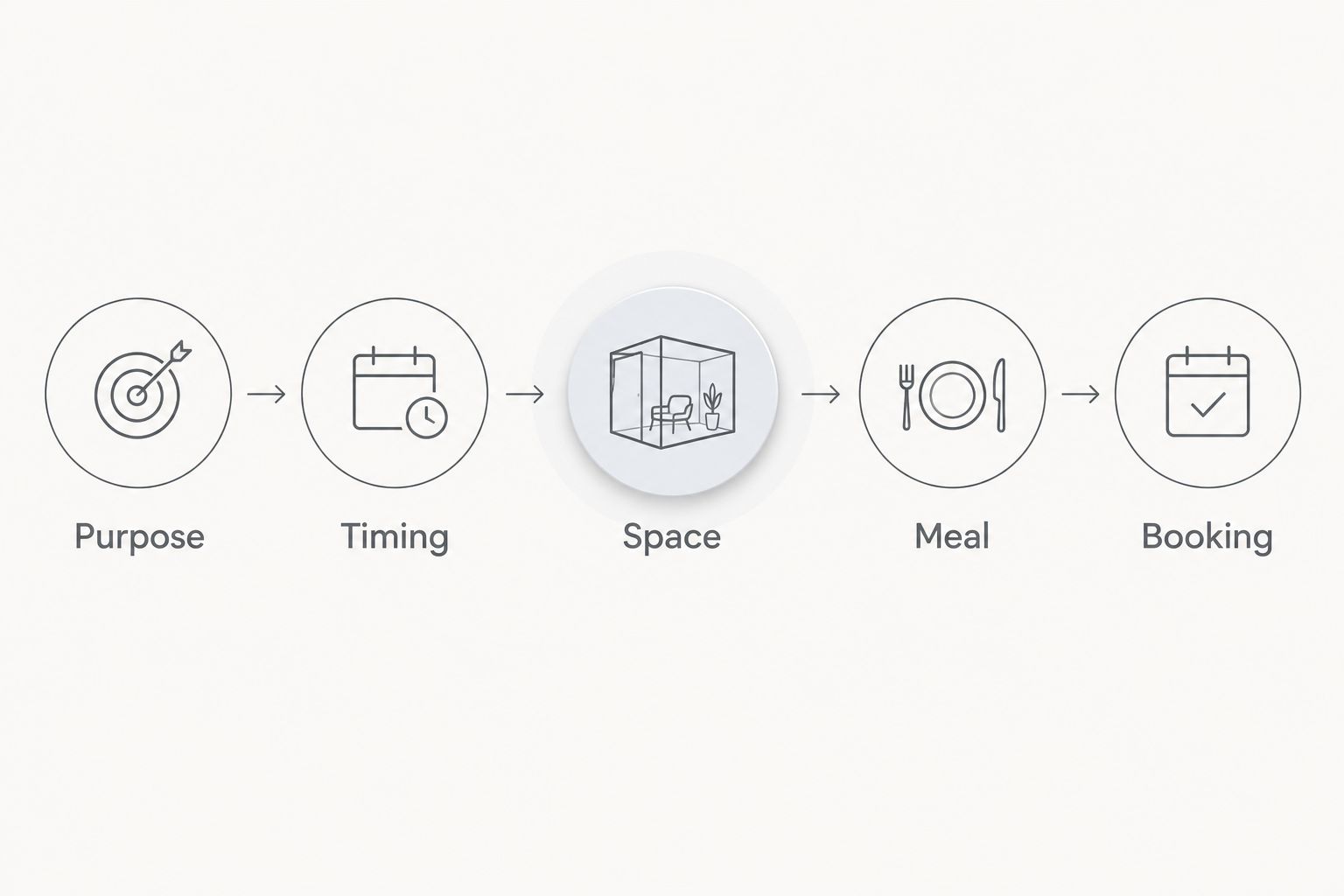
The planning sequence is simple: agree on the purpose, establish timing, confirm the space, then settle the meal and booking. Resolve those decisions before adding optional details.
Compare dining formats for your healthcare team
Choose the format around attendance and the reason for gathering. The options below are planning categories, not a claim that every arrangement is offered by a particular restaurant. Confirm the exact setup before booking.
| Option | Best for | Main advantage | Key limitation |
|---|---|---|---|
| Reserved restaurant table | Colleagues gathering primarily for dinner | Keeps the plan centered on a shared meal | Does not provide exclusive space or privacy |
| Confirmed private room | Teams needing a separate social setting | Separates the gathering from the main dining area | Requires explicit confirmation of layout and use |
| Confirmed restaurant buyout | Events requiring exclusive restaurant use | Gives the group a dedicated setting | Needs a separate agreement and direct operational discussion |
| Workplace catering | Teams whose attendance must remain workplace-based | Brings the meal to the chosen workplace setting | Requires an approved space and clear setup responsibilities |
| To-go meals | Colleagues eating at different times | Supports separate pickup and eating arrangements | Does not create a shared restaurant experience |
For a dinner-first gathering, Mangia E Bevi offers an Italian restaurant option in Massapequa Park, with cocktails and wine alongside the meal. The limitation for private-dining planning is straightforward: you must confirm the actual space and event arrangements directly. Catering and to-go meals are alternatives when the team’s schedule does not support a shared restaurant visit.
Once your preferred format is clear, move from browsing to a specific request. Ask about your date, group size and dining needs together so the response addresses the whole event.
Plan your midweek team dinner
Start with Wednesday or Thursday, then confirm your group’s dining and event requirements.
Common mistakes healthcare-team organizers make
Treating a group reservation as a private room
A reservation confirms only the arrangements actually accepted. Ask specifically about separation, seating and shared areas; do not describe the event as private in your invitation until that requirement is confirmed.
Choosing a date before checking shift coverage
An attractive date is not useful if invited colleagues cannot attend. Collect schedule constraints first, then choose the dinner time and decide how to include colleagues who remain at work.
Making drinks the main invitation
Lead with the meal and the occasion. Keep wine and cocktails optional, and check organizational rules before making any commitment about hosted drinks.
Collecting dietary information in a public group chat
Give guests a private response route. Share relevant requirements with the restaurant and obtain direct answers instead of asking colleagues to make assurances about food preparation.
Adding business discussion to a social dinner
Do not use restaurant privacy as permission to discuss patients or sensitive personnel matters. Keep recognition and conversation separate from work that belongs in an appropriate professional setting.
FAQ
What’s the best way to plan private dining for Long Island healthcare teams?
Start with confirmed attendance, shift-compatible timing and a clear definition of privacy. Then ask the restaurant to confirm the space, meal arrangements and booking terms in writing.
Is Mangia E Bevi an option for a healthcare-team dinner?
Mangia E Bevi is an option for teams seeking upscale Italian dining in Massapequa Park. It also offers cocktails, wine, catering and to-go meals; ask directly about private-event arrangements for your group.
Should we choose Wednesday or Thursday for our team dinner?
Choose Wednesday or Thursday only after checking the invited team’s schedules and the restaurant’s current booking options. Neither day guarantees a quieter setting, a private area or a particular reservation time.
Does booking a table mean our team gets a private room?
No, a table reservation does not establish private-room access. Ask for a description of the space and written confirmation of any exclusive-use arrangement before telling guests the dinner is private.
How do we arrange dinner for colleagues with food allergies?
Collect allergy information privately and discuss each requirement directly with the restaurant. Do not promise a dish or preparation arrangement until the restaurant has answered the relevant questions.
Can we include colleagues who do not drink alcohol?
Yes, plan the event around dinner and make alcoholic drinks optional. Ask about current alcohol-free choices and communicate that the gathering is for the whole team.
How do we reserve a table for a 2026 team dinner?
Use the OpenTable reservation link on the restaurant’s main website for a table booking. Confirm group-specific requirements and any private-event arrangements directly rather than assuming they are included in the reservation.
One last thing
The most useful question is not whether a restaurant hosts groups; it is what your group needs to share. If the answer is dinner and conversation, keep the plan simple. If the answer includes confidential information, move that portion elsewhere and let the meal remain a welcome break from work.